Photos on this page: © Manuel Seoane / IUCN NL
A Bolivian forest the world has overlooked
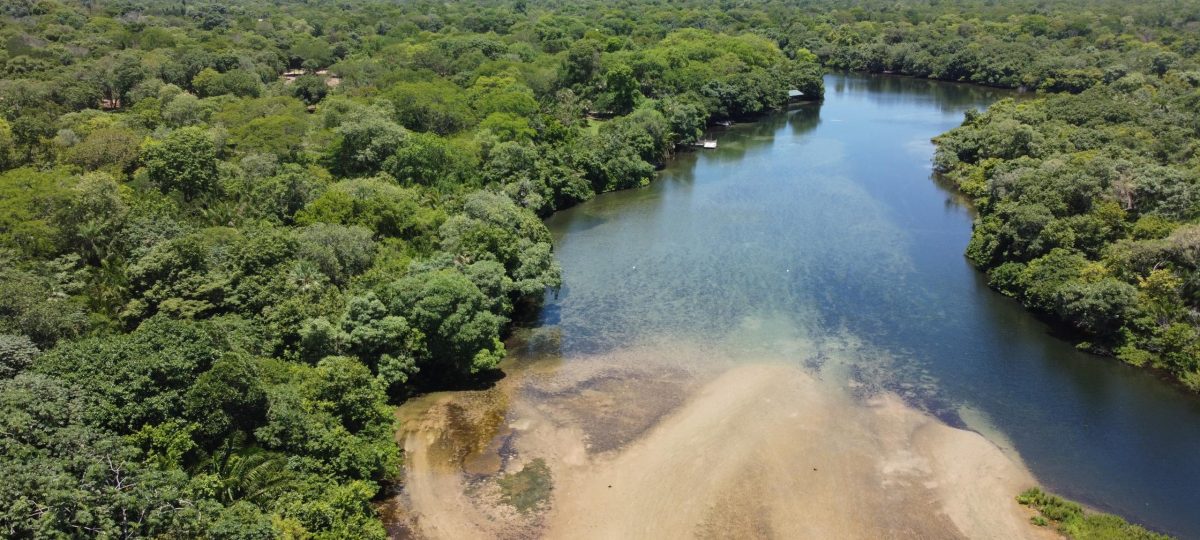
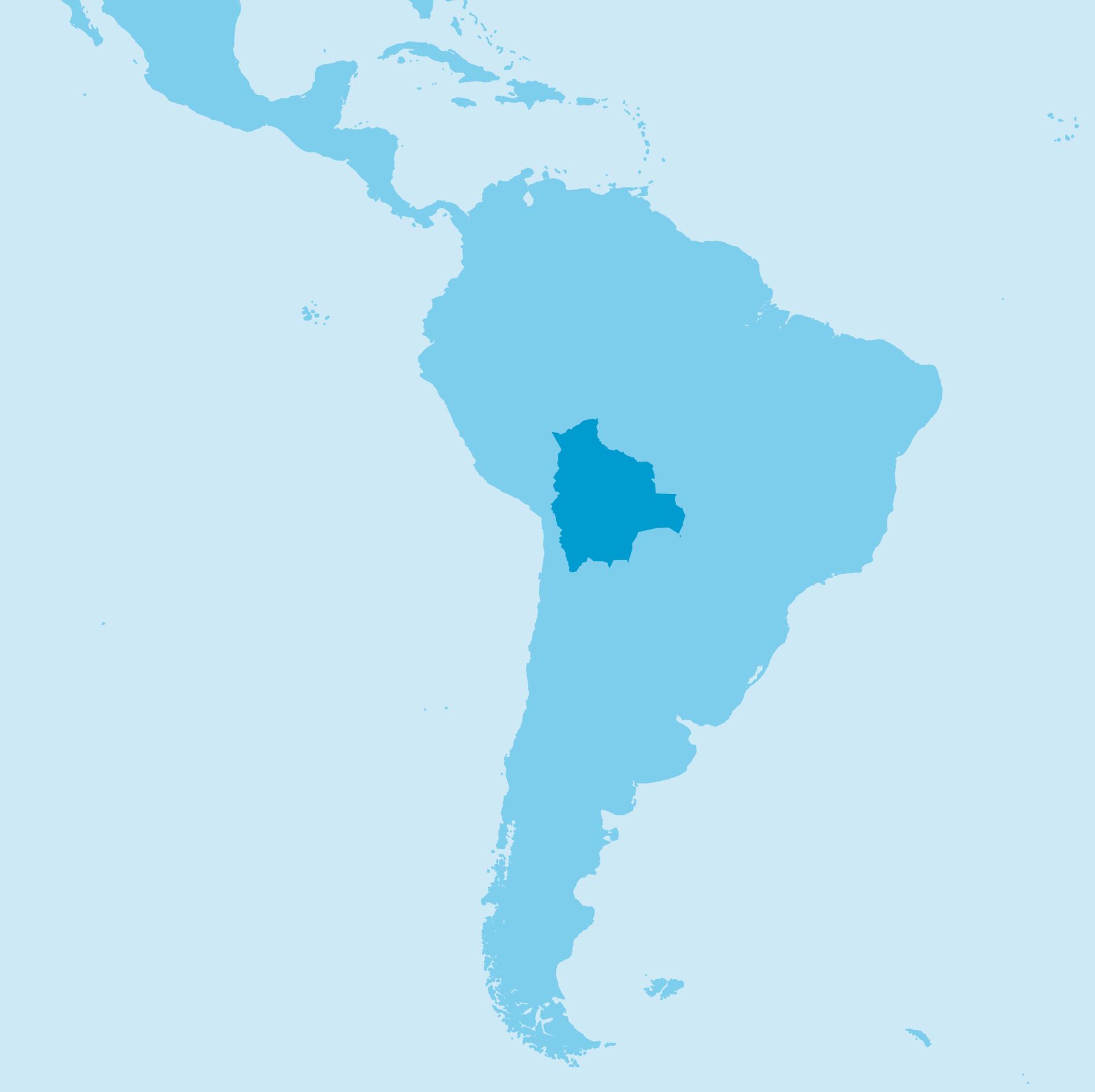
The Chiquitano Dry Forest, the defining ecosystem of the Chiquitania region in eastern Bolivia, is one of the largest and best-preserved tropical dry forests in the world, home to more than 3,000 plant species and 1,200 vertebrate species, including the jaguar, giant anteater, and maned wolf. Approximately 3 million people depend on the forest for water, food, and livelihoods, but it is one of the most fragile and threatened ecosystems on the planet.[1]Maillard, O. et al (2024). Public Policies and Social Actions to Prevent the Loss of the Chiquitano Dry Forest. While humid tropical forests like the Amazon basin have dominated global conservation priorities, the Chiquitano has been largely overlooked.
Bolivia recorded the second-highest tropical primary forest loss globally in 2025 at 620.000 hectares, surpassing the Democratic Republic of the Congo – despite having 60% less primary forest area.[2]Goldman, E. (2026). Tropical Rainforest Loss Slowed in 2025, but Fire is a Growing Threat to Forests Worldwide. The Chiquitania is dominated by private cattle ranches, mechanised soy production and yearly forest fires. By 2022, total deforestation in the Chiquitano Forest had reached 2.8 million hectares, representing 39% of Bolivia’s total forest loss. [3]Global Forest Watch. Bolivia Deforestation Rates and Statistics. And as the trees disappear, so does the water.
Connecting forests, water, and people
In the Chiquitania region, the link between forests and water in the is well understood by the local communities. However, it remains poorly documented and rarely considered in the land-use planning decisions made by local governments and companies in the area. Communities lack the data and tools to make their case, agribusinesses often have no knowledge of the water sources their activities affect, and local governments have little basis for informed decision-making.
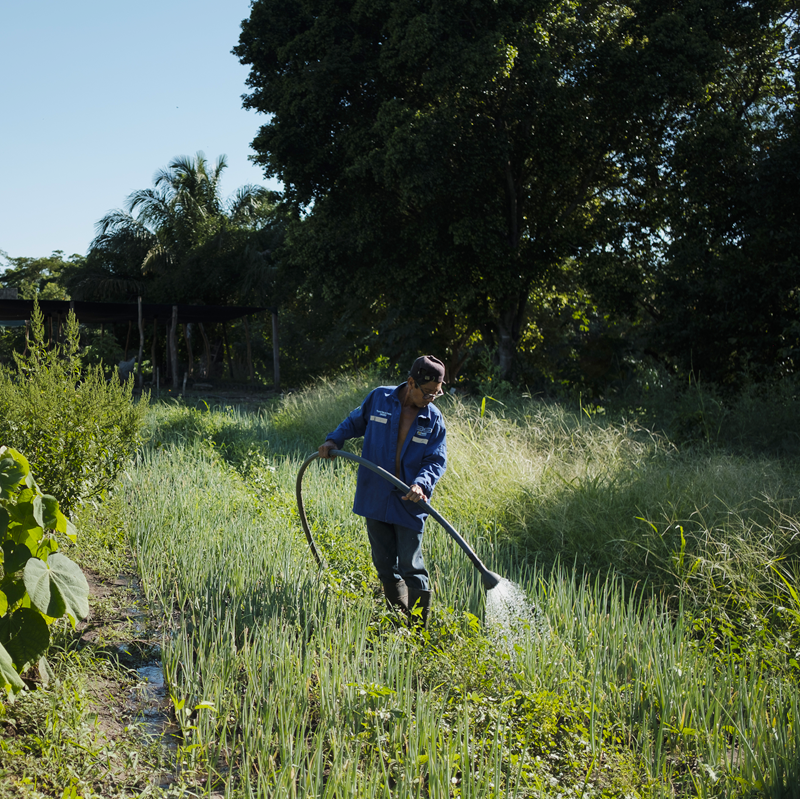
Working on the water-forests nexus, IUCN NL is committed to inclusive water governance that recognises the interdependency between forests, water systems, biodiversity, and local livelihoods. The Roots of Resilience project partners apply a community-based water management approach focusing on local control and participation. In this way, we enable the acknowledgement of communities’ responsibility of water systems and sustaining the project results on forest and biodiversity over time.
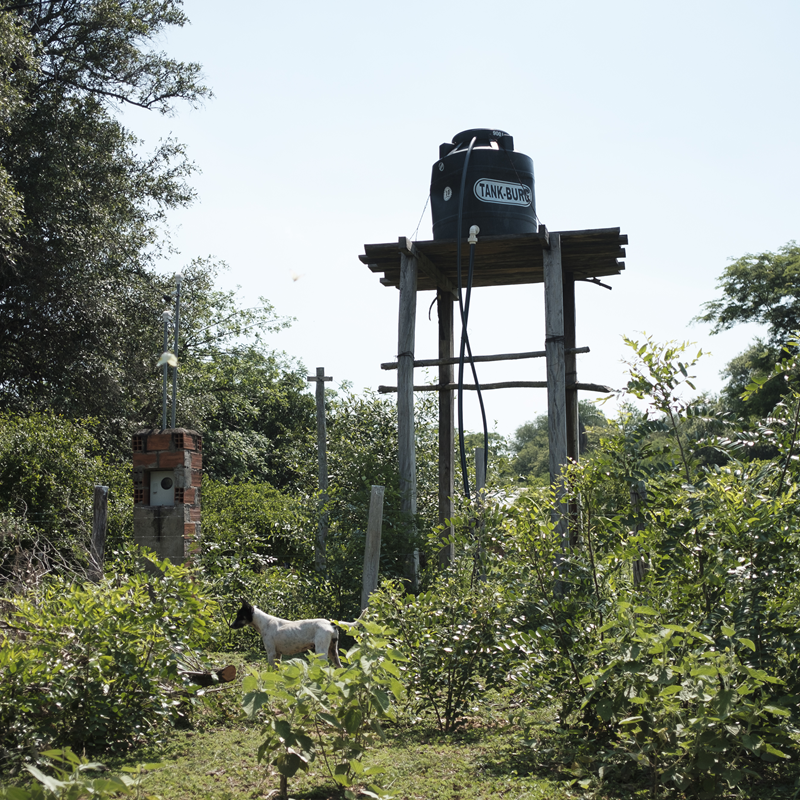
Water-forest nexus local support model
Building on our work on water resource modelling in the region, the Roots of Resilience project develops a water-forest nexus local support model for three municipalities (San José, San Rafael and San Ignacio) encompassing 117,357 people across fifteen communities. The model generates maps showing community water sources and the critical forest areas that protect them, providing evidence-based insights to guide action planning and strategic policies to communities, agribusinesses, and local governments. To achieve this, we work through three outputs.
- Evidence and tools. We develop a water-forest nexus model that maps priority forest areas, biodiversity hotspots, and community water sources across all three municipalities. At least 200 local actors are will be trained in how to use this evidence.
- Engagement, awareness and knowledge. Through workshops, we build the capacity of communities, water committees and local governments to understand and act on the forest-water link. We also engage agribusinesses on the rights of local communities and concrete steps to improve their practices.
- Action plans. Communities and agribusinesses co-produce forest and water management action plans, validated through assemblies and round table meetings, and shared with municipalities for incorporation into land-use plans and policy making.
Due to their daily activities, women in the Chiquitania are often the first to feel the effects of water scarcity and land dispossession. In addition, their knowledge of water use and forest resource management is essential. A gender approach is therefore applied throughout the project.
Roots of Resilience project partners
IUCN NL connects, supports, and empowers. In our international work, our local partners always take the lead in the field to ensure it is locally-embedded, inclusive, and sustainable. In addition to overall project management of the Roots of Resilience project, we are responsible for facilitating the transfer of expertise on water governance, biodiversity, and the water-forest nexus. We also contribute to strengthening the capacity of local partners and communities to advance forest and water conservation in the Chiquitania region through coordinated activities at both local and global levels.
Local partner organisation Productividad Biosfera Medio Ambiente (Probioma) has a long standing collaboration with local communities and proven results on the ground. In the Chiquitania, they work on water and forest initiatives while solidly connecting with both governments and communities. The Hydrogeology Research Group (IHDRA) of the Catholic Bolivian University has been focusing on studying the hydrological dynamics in the Chiquitania region, particularly the vulnerability of water sources to forest fires and groundwater monitoring.
Aligning with IUCN NL strategy
Our projects align with the three interlinked pathways set out in our 2024–2026 strategy update. The Roots for Resilience project aligns all three pathways:
- Climate-resilient landscapes with rich biodiversity;
- Nature policy;
- Environmental policy.
More information? Contact:



Index
| ↑1 | Maillard, O. et al (2024). Public Policies and Social Actions to Prevent the Loss of the Chiquitano Dry Forest. |
|---|---|
| ↑2 | Goldman, E. (2026). Tropical Rainforest Loss Slowed in 2025, but Fire is a Growing Threat to Forests Worldwide. |
| ↑3 | Global Forest Watch. Bolivia Deforestation Rates and Statistics. |