News
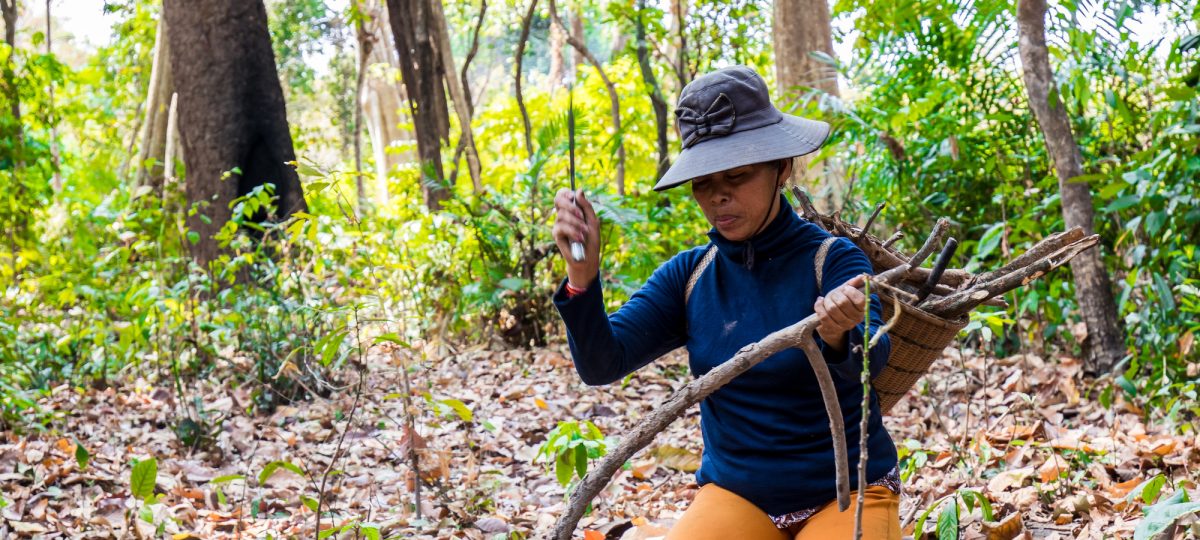
Headerphoto: Woman collecting wood (c) Kouy Socheat, NTFP Cambodia IUCN NL
No say in decision making
In decision-making about economic developments, the interests and insights of communities are often ignored or not taken seriously. This is a missed opportunity, because local people have valuable knowledge that is indispensable for sustainable landscape management.
In addition, traditional knowledge is disappearing within these communities. Young people are increasingly moving to cities, resulting in the loss of intergenerational knowledge. Changes in land use are also causing knowledge about species and the interactions between them to be lost. Finally, governments and development organisations do not always take into account the worldviews and knowledge of communities that have a strong relationship with the land and nature.
The significance of land rights
The consequences of these developments are often even greater for women, as they play a key role in food production, the collection of medicinal plants and water, and the sustainable use of natural resources. They also often play an important role in preserving and passing on traditional knowledge about nature and have a cultural connection to the land.
However, there are solutions to these problems: by strengthening the voice, rights and capacities of local communities and indigenous peoples, especially in areas of high biodiversity value, we can better protect nature.
Firstly, it is important that the land rights of local and indigenous communities are recognised and respected. We contribute to this by strengthening local and indigenous communities and the civil society organisations that work with them. We do this bottom-up, based on local needs, mutual trust, respect and long-term cooperation.
By strengthening organisational structures, local and indigenous communities are better equipped to manage nature sustainably, even in a changing world. To this end, we advocate effective governance by and with them, based on their knowledge, capacities and rights. We pay particular attention to the interests of women in order to achieve greater gender equality.
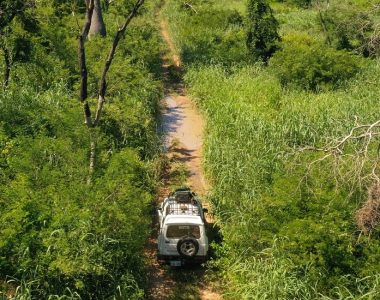
Protecting nature with the knowledge of local communities
The Nembi Guasu nature reserve is the first protected area in Bolivia to be formally declared by an autonomous government. Communities that have been the original inhabitants of the area, such as the Guaraní people, have lived in and around Ñembi Guasu for many generations. Their knowledge and involvement are essential for sustainable and fair nature management.
In addition, it is important that governments, civil society organisations and other stakeholders recognise the “other effective conservation measures” (OECMs) formulated by the IUCN in achieving national nature conservation goals.
To this end, we connect partners with each other and with regional and international networks and UN mechanisms, where they can stand up for their rights and interests while learning from others. We facilitate exchange and dialogue and jointly seek solutions that bring together traditional and scientific knowledge.
IUCN NL works on various projects to increase the role of communities in the management of their natural resources. In Indonesia, for example, we are working within the Shoulder to Shoulder project with local partners KKI Warsi, Walhi and Aksi! to strengthen local civil society organisations and community organisations in their work and, through the Social Forestry programme offered by the Indonesian government, to legally establish the right of local and indigenous people to manage their forests..
Learn more