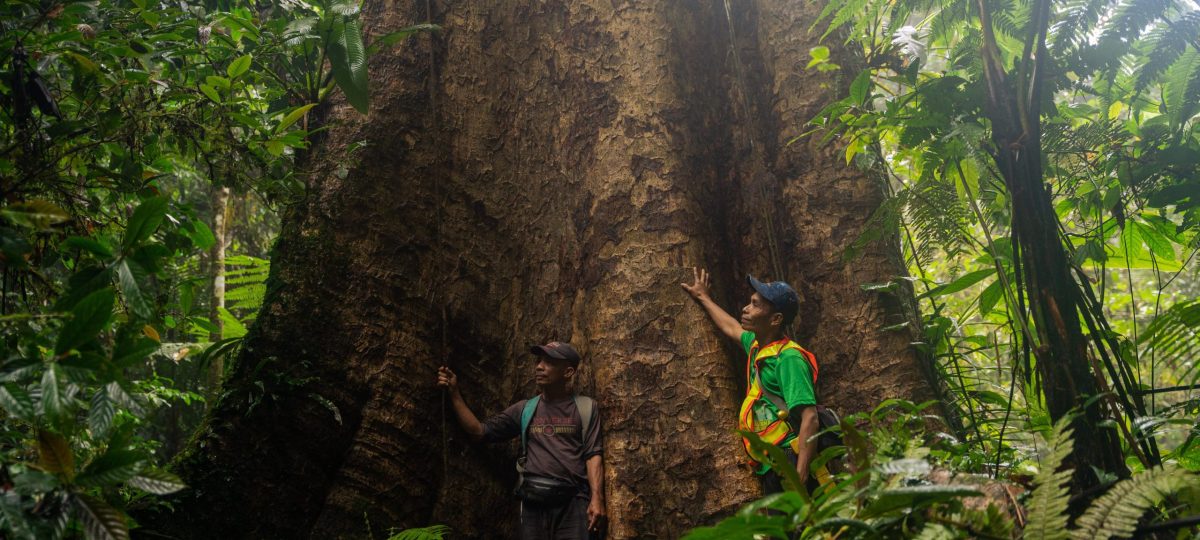
Header photo: Forest patrol in Indonesia © Stephanie Broekarts/IUCN NL
They are on the frontlines of conservation, often working under challenging conditions to protect and restore nature and endangered species. Ecologists, activists, journalists, local communities, Indigenous peoples, women’s networks, and local youth form the beating heart of these efforts. They are indispensable. Yet too often, they do not receive the recognition and trust they deserve. With Nature’s Heartbeat, we weave their power and potential into the very fabric of global conservation.
With support from the Postcode Lottery, IUCN NL, Armonia Bolivia, A Rocha Ghana, Ecotrust, The Alliance for Tompotika Conservation (ALTo), KKI WARSI, NATIVA, NTFP-EP, Saamaka Oto(VSG) and Strong Roots Congo are joining forces in the Nature’s Heartbeat programme.
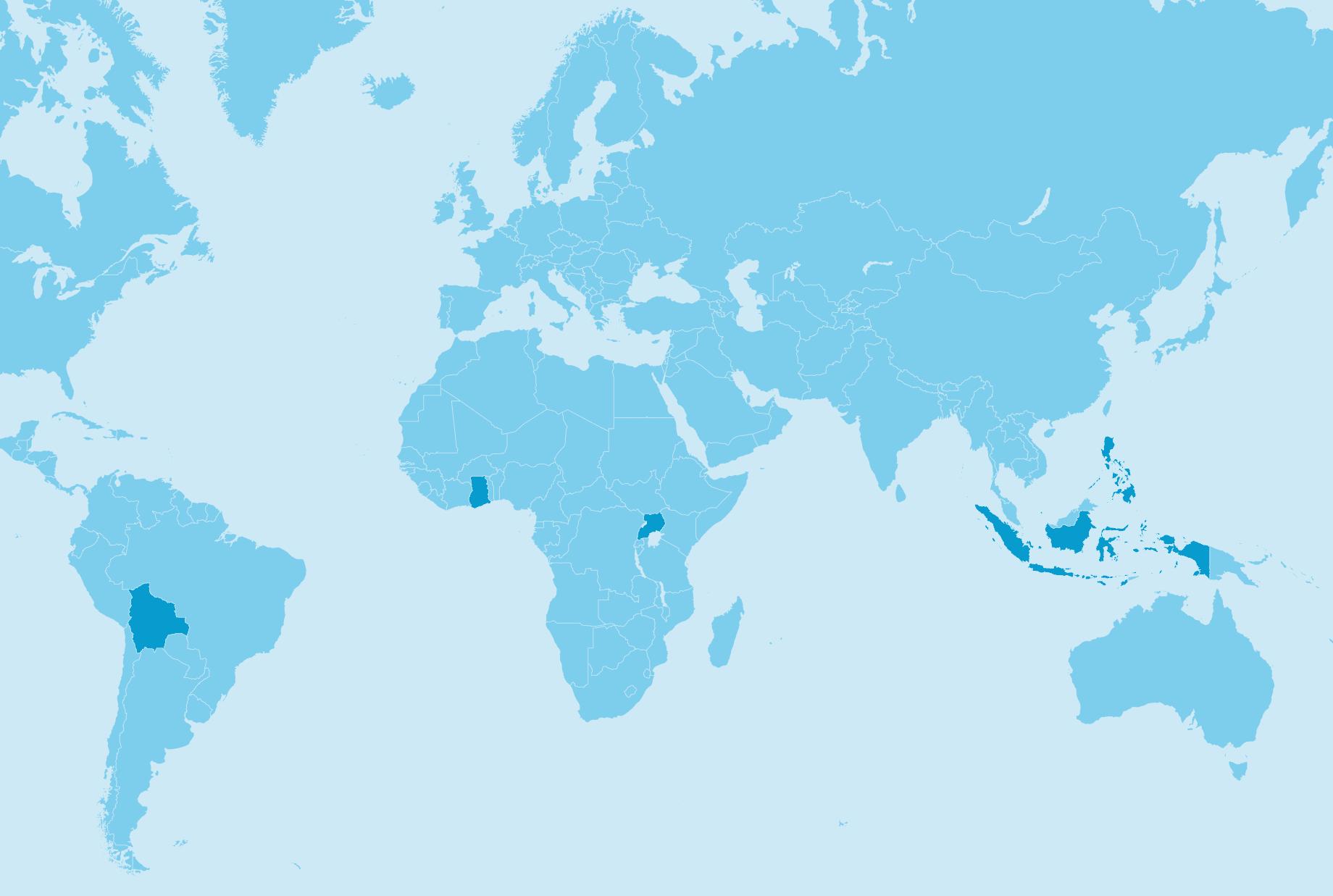
Together, we focus on areas of high natural value and unique biodiversity that are under pressure: Key Biodiversity Areas. Our work spans seven landscapes across five countries, which host a total of twelve vital Key Biodiversity Areas. These are landscapes where, through strong partnerships and the leadership of local conservationists, we are making a tangible difference for the fragile and important biodiversity they protect.
Barriers faced by conservationists
Conservationists are facing growing pressures from climate change, political instability, and resource scarcity. Women, youth, and local organisations are particularly affected, while their valuable knowledge of nature conservation often goes underappreciated.
As a result, local conservationists are insufficiently recognised or supported. They frequently operate in contexts with weak governance, complex funding landscapes, and a shrinking civic space. Funding reaches them with difficulty. Strict requirements make it difficult for small organisations to get sufficient funding. They have to meet strict requirements without help to build that capacity. This prevents them from scaling up their work, despite the fact that their efforts are essential for effective conservation.
‘You can form all the committees, all the societies, all the working groups, all the charities you like, but you know that in the end it is that one individual, that one individual that has passion, that one individual that has fire in the belly, that one individual that is determined that something should be done.’
- Sir David Attenborough
Nature’s Heartbeat approach
To improve the position of nature conservationists and the financing of nature conservation, we are working along two pathways, together with a strong coalition of local organisations. We have identified the steps needed to achieve our goals within both pathways.
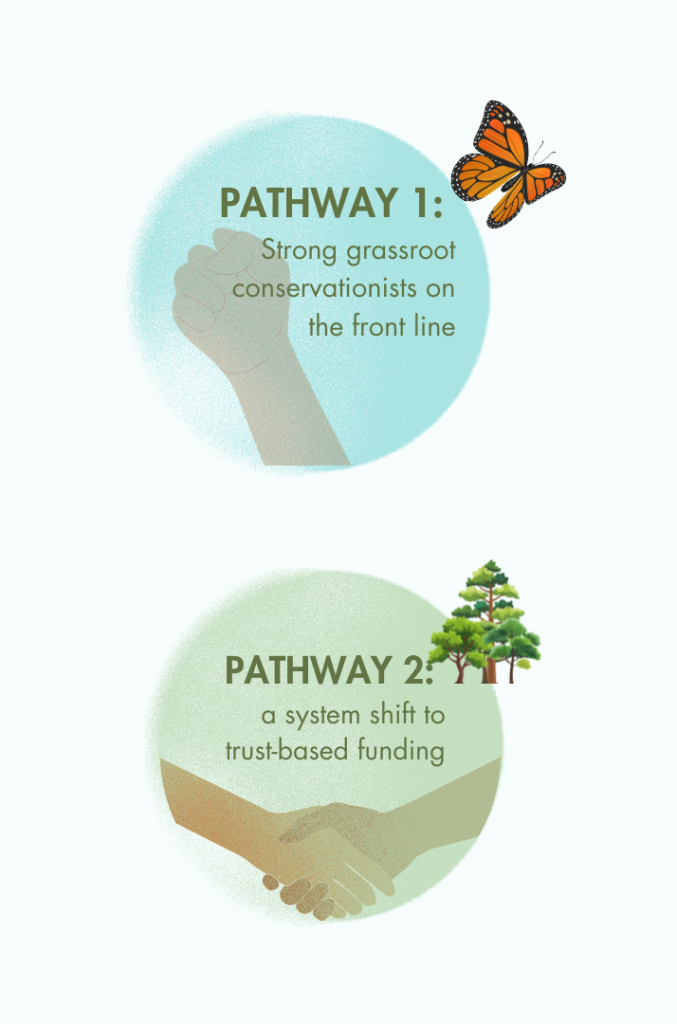
1. Strong conservationists on the frontline
We support around 30 selected conservation organisations on the basis of trust. These organisations receive three-year, flexible financial contributions to pursue their mission. In addition, we offer them capacity building through coaching, training and tailored advice.
2. A shift to trust-based funding
We work to increase the visibility of local nature organisations among the global public. At the same time, we advise parties on how to reach even more local nature organisations.
Trust-based funding
Trust-based funding is a growing movement that calls for a fundamental shift in mindset within the funding world. At its core lies trust. This approach enables organisations to receive flexible, unearmarked funding and decide how to best allocate it, guided by local conservation priorities. Reporting becomes a mutual dialogue rather than a one-sided obligation from grantee to donor.
We believe that nature is best protected by the people who have lived in and cared for these landscapes for many years. That is why it’s encouraging to see this movement gaining global traction. It allows us to apply our approach, centered on locally-led development, more and more consistently.
Landscapes
We focus on areas of exceptional natural value and biodiversity that are under pressure: so-called Key Biodiversity Areas. These areas are not only vital for biodiversity; they also hold deep cultural significance and provide essential ecosystem services. Through Nature’s Heartbeat, we concentrate on seven landscapes spread across five countries, encompassing around ten Key Biodiversity Areas.
These areas face threats from deforestation for agriculture, mining activities, and climate change. In addition, they suffer from a lack of good governance and the loss of local knowledge.

Atewa forest swamp © Jeremy Lindsell
Two types of landscapes
We distinguish between core landscapes and incubator landscapes. In the core landscapes, we aim for broad impact by strengthening a diverse network of local conservation organisations for over three years. In the incubator landscapes, we take a start-up approach: we start with a smaller number of local partners to create a proof of concept and a solid base in the area. On this basis, we can attract additional resources and donors to scale up the landscape into a core landscape.
Goals and long-term impact
Nature’s Heartbeat aims to make a positive impact on:
- Approximately 30 local conservationists and their organisations
- Growing conservation organisations that further strengthen and connect the local network
- Stronger organisations operating across roughly 3 million hectares of nature located in 10 Key Biodiversity Areas across landscapes in Bolivia, Philippines, Ghana, Indonesia, and Uganda
- Habitats critical to the survival of endangered animal and plant species.
- A shifting international funding landscape that embraces a new culture of greater trust, so-called ‘trust-based funding’.
The role of IUCN NL
In Nature’s Heartbeat, IUCN NL works through a global network to drive systemic change, anchoring conservationists firmly within the global conservation movement, with trust-based funding as its foundation. The programme follows a local-to-global-to-local approach, combining proven methods with innovative tools to strengthen locally-led conservation efforts and amplify their impact worldwide.
This programme is funded by the

More information? Contact our experts: