IUCN NL at COP17 in Yerevan: locally led…
12 October, 2026
IUCN NL at COP17 in Yerevan: locally led…
12 October, 2026
BESTLIFE2030 launches its third call for proposals
08 October, 2026
Thursday 27 november 2025
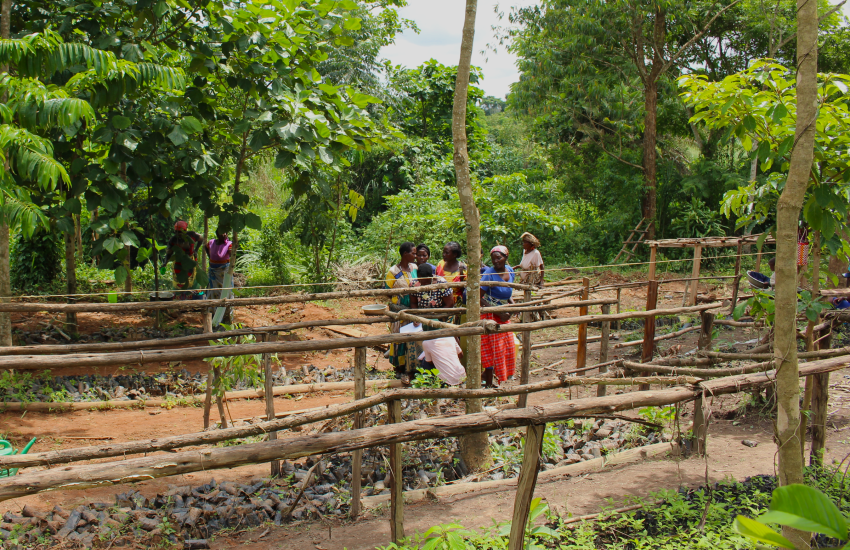
Header photo: women working on a reforestation project in Uganda by ECOTRUST © Fanny Verkuijlen / IUCN NL
The Sustainable Development Goals Partnership (SDGP) Webinar Series demonstrated that achieving climate and biodiversity goals requires integrated approaches, inclusive governance, credible finance, and adaptive systems. Focusing on isolated short-term projects alone is not sufficient. Instead, we should take integrated steps to manage ecosystems, cut pollution, ensure proper water management, promote agro-ecological practices, and tackle climate change. Interventions should be inclusive of women and youth to ensure social equity and sustainable outcomes. By applying these lessons in future partnerships and business cases, projects can become examples of sustainable development, delivering ecological resilience, economic opportunity, and social justice together. In this article, we share a summary of key lessons learnt, best practices, and ways forward for SDGP projects.
Climate and biodiversity cannot be treated separately. As demonstrated in the 2024 IPBES nexus report, food, water, climate, biodiversity, and health are deeply connected. The report indicates that ‘Societal, economic and policy decisions that prioritize short-term benefits and financial returns for a small number of people while ignoring negative impacts on biodiversity and other nexus elements such as climate and water lead to unequal human well-being outcomes.’
The following best practices can be drawn from the webinars:
Various speakers emphasised the climate-biodiversity nexus. During the first webinar, AidEnvironment demonstrated the nexus through the Going Bananas project, where 2,000 farmers in the Philippines moved from single-crop farming to mixed agroforestry improving carbon storage, soil health, and biodiversity at the same time. Agriterra presented low-carbon coffee value chain in Kenya with six facilities producing 335,000 kg of compost each year and reNature demonstrated how conventional farming systems in both Indonesia and Ghana can be successfully transitioned into resilient agroforestry in a structured and scalable way starting small, validating impact, and then expanding. A few months later, the Kennemer Group (webinar four) shared landscape approaches that combine carbon and biodiversity credits through community management. Last but not least, IUCN NL stressed the importance of working with the Global Biodiversity Framework’s 23 targets and using the IUCN Global Standard for Nature-Based Solutions’ eight criteria in webinar two and six.
Including all stakeholders, especially women and youth, should be embedded in project design from the outset, as this is key to achieving locally-led sustainable development. In particular, the third webinar showed how gender justice is key to effective climate and biodiversity projects.
Best practices include:
In the third webinar, Partners for Innovation shared research from Niger showing women are more concerned about climate change and actively lead conservation and marketing work. Both Ends stressed in webinar six the importance of including women, youth, and pastoralists when designing the Communities Regreen the Sahel program. Also in the third webinar, IUCN NL elaborated on the Gender Action Learning System (GALS), a participatory method used in Uganda’s forest restoration project that reduces inequality, empowers women, and improves results for locally-led conservation oriented enterprises.
Carbon and biodiversity credits can provide a positive impact. However, assuring smallholder farmers can access them fairly and preventing only wealthy individuals benefit, requires strong standards and careful design.
Best practices identified during the webinar:
In the fourth webinar, TREEVIVE highlighted the need for integrity in voluntary carbon markets and working with trusted certification schemes like VCS, Gold Standard, and Plan Vivo. Max Berkelmans, working with ACORN and Rabobank, addressed during the same event the barriers smallholders face: certification, measurement and monitoring, market access, and getting finance. He showed how partnerships with Plan Vivo Foundation and remote sensing technology may help solve these problems. Subsequently, the Kennemer Group noted companies will pay more for high-quality credits with clear community benefits.
Strong but flexible Monitoring, Evaluation, and Learning (MEL) systems are important. Traditional monitoring focuses on proving impact to donors, but success comes from learning cultures where projects adapt based on feedback and local knowledge.
Best practices include:
In the fifth webinar, multiple organisations discussed monitoring and evaluation frameworks and practices. RVO introduced learning-oriented monitoring, which focuses on learning rather than just accountability, and emphasises the importance of learning culture, safe spaces, time, and capacity. Next, AidEnvironment presented an agroforestry monitoring tool that combines farm-level and landscape-level indicators to show how individual farm improvements helped restore larger areas. In the Tsara Project in Madagascar, a land simulation platform is used that combines local and scientific knowledge through scenario modelling to help communities make informed policy decisions. Additionally, reNature and a collaborator of Wageningen University shared insights on Participatory Monitoring & Evaluation (M&E) based on their work with Regenerative Rice Systems in Bali, Indonesia. reNature applies a farmer-inclusive M&E approach to assess regenerative practices in complex rice cultivation systems. This methodology not only measures environmental impact, but also integrates farmer knowledge, community feedback, and on-farm data to ensure that improvements are locally relevant, adoptable, and scalable.
Proven methods like farmer-managed regeneration, bio-solution production, and participatory agroforestry must be scaled through supportive policy, finance, and knowledge-sharing, with attention to cost-effectiveness.
The following best practices were identified:
During the first webinar, AidEnvironment showed scaling through the set-up of the Carbon Organic Slope Farmer Association (COSFA), shifting farmers from being project beneficiaries to trained educators who disseminate which changed from project beneficiaries to teachers spreading regenerative agriculture practices to other communities. Woord en Daad showed scaling youth entrepreneurship in Chad with climate risk tools and agroecological solutions in webinar three. A few months later, in the closing webinar, Both Ends presented the Communities Regreen the Sahel programme’s remarkable result: restoring 140,000 hectares at less than 50 euros per hectare through farmer-managed natural regeneration.
Based on the lessons learnt from the webinars, we have identified practical recommendations for future SDGP projects.
This year’s SDGP Knowledge Exchange Webinar Series consisted of six webinars taking place between November 2024 and June 2025. These knowledge exchange events provide action-oriented perspectives on climate change, biodiversity and nature-based solutions, highlighting specific examples from SDGP projects. Bringing together people from around the globe, the series was organised by IUCN NL, reNature, and VU Amsterdam, on behalf of the Netherlands Enterprise Agency (RVO).
12 October, 2026
From 19 to 30 October 2026, the UN Biodiversity Conference (CBD COP17) takes place in Yerevan, Armenia, under the theme…
08 October, 2026
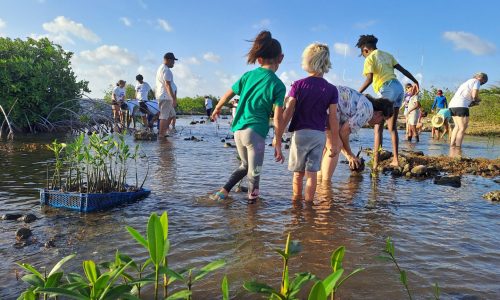
We are pleased to announce that the third BESTLIFE2030 call for proposals is now open, providing new funding for locally…
