IUCN NL at COP17 in Yerevan: locally led…
12 October, 2026
IUCN NL at COP17 in Yerevan: locally led…
12 October, 2026
BESTLIFE2030 launches its third call for proposals
08 October, 2026
Thursday 10 july 2025
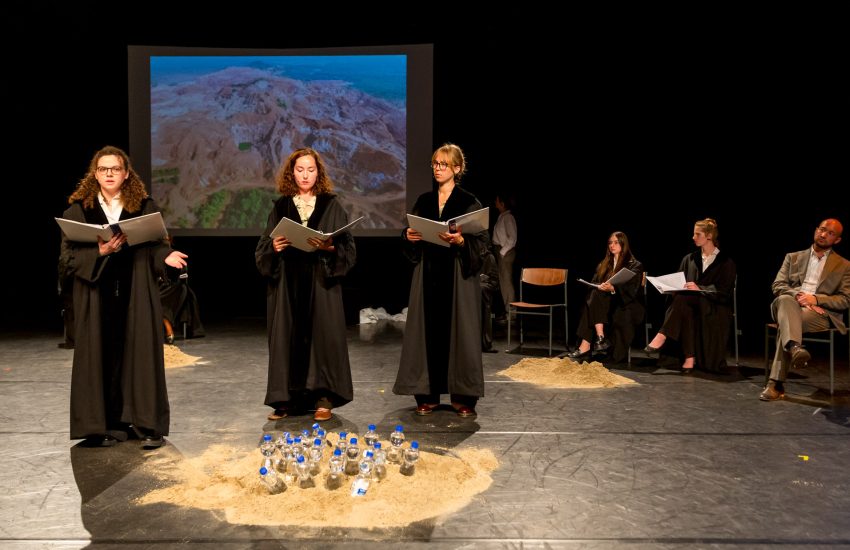
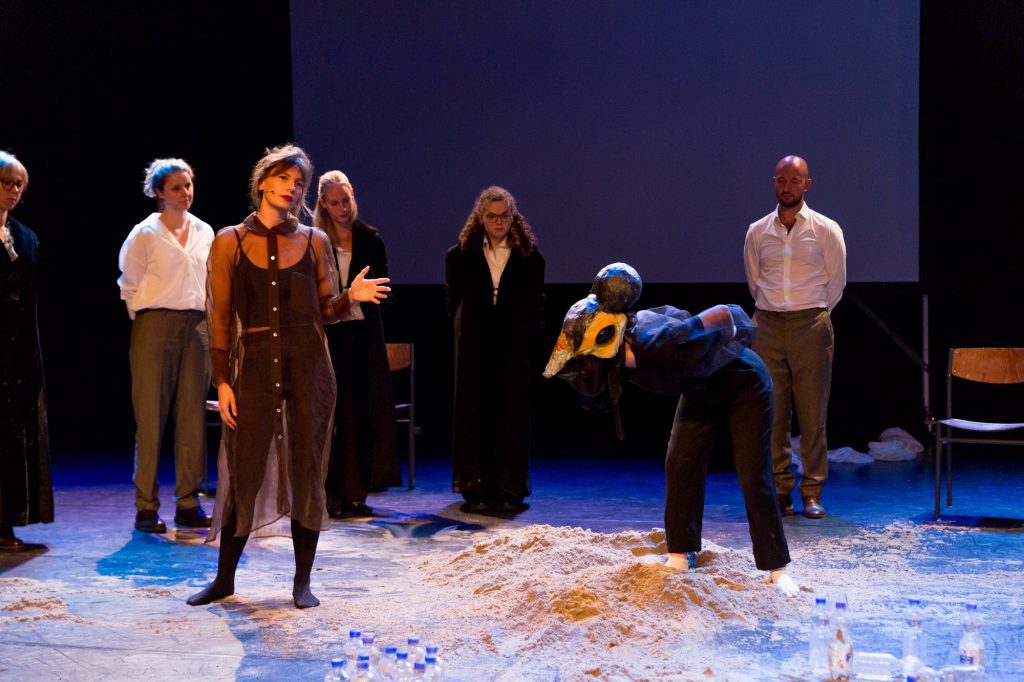
On the 18th and 19th of June, the theatre performance ‘THIS IS NOT A TRIAL’ took place at the ZIMIHC theatre in Utrecht. In this theatre performance, students took on the lead roles of prosecutors, lawyers and judges. The performance was developed by researchers and the aforementioned students from Utrecht University, as part of the interdisciplinary project Conceptualising Ecocide in collaboration with IUCN NL, EcoJustice (formerly known as Stop Ecocide NL), the Indonesian organisation ALTo, artists and actors.
Header photo: The trial of possible ecocide in Sulawesi is being heard in performance © Bart Weerdenburg
In a sold-out show, the students presented a powerful and well-received performance that focused on the bill on ecocide (tabled by the Party for the Animals in 2023) and the complexity of the energy transition. While the energy transition is necessary to reduce CO2 emissions, the mining required for raw materials such as nickel – essential for that same transition – leads to large-scale deforestation, destruction of biodiversity and degradation of a healthy environment.
On trial was the Dutch multinational Smith Refineries N.V. and its CEO. They are being sued for the large-scale destruction of an Indonesian ecosystem where nickel and other earth metals are mined by their subsidiary, an Indonesian mining company.
With short artistic contributions, actors, artists and a poet gave depth to the diverse themes within the energy transition. One of the scenes gave voice to the consumer: someone who believes they are acting sustainably by buying an electric car, but is largely unaware of the ecological damage that this can cause.
At the same time, the performers drew a sharp parallel between colonialism at the time of the Dutch East India Company (VOC) and the way multinationals today exploit natural resources for their own gain. The dilemmas faced by the Indonesian people – potential employment versus serious pollution of their environment – were addressed through interviews with members of communities near the nickel mines on the Indonesian island of Sulawesi. The Alliance for Tompotika Conservation (ALTo) played a key role in this, thanks to the trust it has earned within the community. This trust enabled residents to speak openly about their dilemmas and their deep, spiritual connection to nature.
Actress Mirthe Dokter gave the endangered maleo, a native bird, a powerful voice in her performance. This was partly thanks to input from ALTo, who provided her with detailed information about the characteristics and lifestyle of this native bird, that is seriously threatened by nickel mining. Dokter was able to portray the animal with accuracy and depth. ‘It was a very successful theatre performance. It was wonderful to see how the students immersed themselves in their roles and presented the various legal arguments in such a convincing manner. The interludes also worked well, allowing for a deeper exploration of various aspects that otherwise would not have been highlighted, such as the voices of consumers and local communities, and placing mining in a historical perspective,’ said Antoinette Sprenger, senior expert environmental justice at IUCN NL.
The audience was ultimately allowed to judge for themselves whether the CEO and/or the mining company were guilty of ecocide. A short survey allowed visitors to give their opinion or indicate their doubts. The results were shared at a panel discussion on the 26th of June in the presence of audience members who had previously attended the theatre performance. The survey is part of a study by Tina Venema (assistant professor at the Copernicus Institute of Sustainable Development) that will be published in due course.
The complexity of the subject matter was reflected in the survey results. More than half of the respondents expressed doubts as to whether the CEO was guilty of ecocide, and did not express a definitive opinion. Of those who did have an opinion, a large majority were in favour of conviction. The public was slightly more outspoken about Smith Refineries: almost half expressed doubt, but among those respondents who did express an opinion, a clear majority found the company guilty of ecocide.
The performance proved to be a powerful tool to start the conversation about the impact of the energy transition on nature and local communities. It also addressed the question of what role ecocide legislation can play in addressing these impacts. Moreover, the audience was confronted with their own position as consumers. The survey showed that this awareness was indeed present: one-third of participants said they saw themselves as indirectly responsible for the destruction of nature.
‘It is important that this conversation takes place, and that the public both sees and experiences its own role in it. Legislation alone is not enough to prevent ecocide. Ultimately, society must take a stand and affirm that ecocide is not acceptable – only then will companies adjust their practices,’ Sprenger believes.
This performance was part of our activities under the Bottom Line! project. With Bottom Line!, IUCN NL works with a coalition of Dutch and international civil society organisations on a fair energy transition with the least possible impact on people and nature. We do this in both the Netherlands and in countries where the raw materials are extracted. Bottom Line! is supported by the Dutch Postcode Lottery.




12 October, 2026
From 19 to 30 October 2026, the UN Biodiversity Conference (CBD COP17) takes place in Yerevan, Armenia, under the theme…
08 October, 2026
We are pleased to announce that the third BESTLIFE2030 call for proposals is now open, providing new funding for locally…