IUCN NL at COP17 in Yerevan: locally led…
12 October, 2026
IUCN NL at COP17 in Yerevan: locally led…
12 October, 2026
BESTLIFE2030 launches its third call for proposals
08 October, 2026
Tuesday 28 october 2025
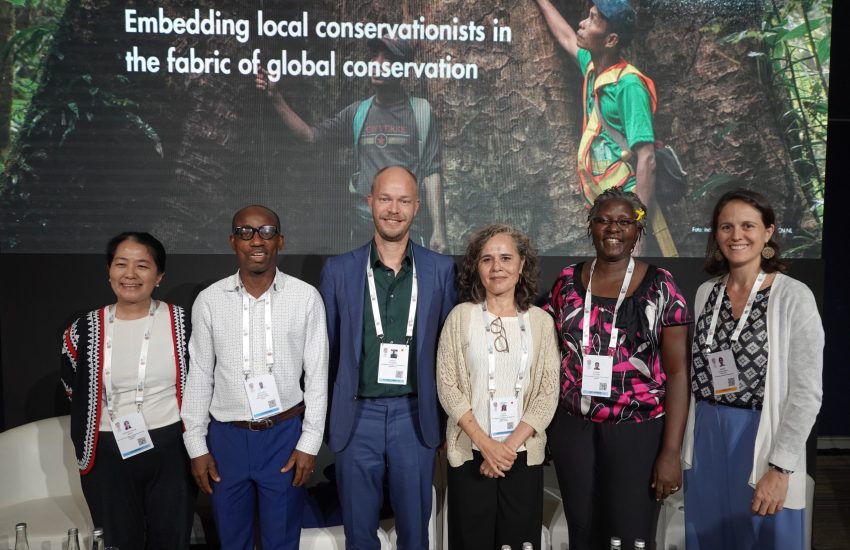
Header photo: at the event Empowering Grassroots Conservation through Trust-Based Funding, Networking, and Capacity Support, with IUCN NL’s Sander van Andel and Liliana Jauregui in the middle. © IUCN NL
The Congress addressed five interlinked themes: scaling up resilient conservation action, reducing climate overshoot risks, delivering on equity, transitioning to nature-positive economies and societies, and disruptive innovation and leadership for conservation. This year’s theme was ‘Powering transformative conservation’. The Congress takes place every four years and is the largest marketplace for conservation and sustainable development science, practice and policy. Scientists, policy experts, business leaders and professionals from around the globe share their experience, innovation and latest research.
The Members’ Assembly is the Union’s highest decision-making body and brings together IUCN Members to debate and establish environmental policy, to approve the IUCN Programme and to elect the IUCN Council and President. Motions are proposed and if they are adopted, they become a Resolution and part of IUCN policy.
At this year’s Member’s Assembly, over 150 motions were adopted, many of which made history or set a new precedent in global policy. These include Motion 061, ‘Recognising the crime of ecocide to protect nature’. The motion called on states to recognise ecocide as a serious crime in national and international law and recommended that States Parties to the Rome Statute evaluate an amendment to make ecocide an explicit ICC crime in peacetime and during armed conflict. It also tasked IUCN’s World Commission on Environmental Law to produce practical guidance on the scope and application of prosecuting ecocide, including how prosecutions can support ecosystem restoration and safeguard geodiversity, with Council support and Director General dissemination to members no later than one year before the 2029 Congress[1]https://www.stopecocide.earth/bn-2025/governments-vote-for-recognition-of-ecocide-at-worlds-largest-conservation-congress . The motion was proposed by Stop Ecocide International and co-sponsored by, among others, IUCN NL partners A Rocha Ghana and Africa Institute for Energy Governance (AFIEGO).
Jojo Mehta, CEO of Stop Ecocide International, in a statement said: ‘This vote is a watershed. IUCN brings together a singularly broad coalition of governments, civil society, Indigenous groups and scientific experts. Its support for recognising ecocide as a national and international crime sends a powerful signal to states and lawmakers worldwide. Ecocide law elevates the gravest harm to nature from a cost of doing business to a crime. By drawing a clear boundary in criminal law, it deters reckless decisions, aligns markets with ecological limits, and affirms that communities and ecosystems are entitled to justice when damage is severe and lasting.’
A Rocha Ghana proposed Motion 104, ‘Safeguarding biodiversity and human rights in energy transition mineral governance’. The motion, which was adopted, advocates for reduced energy and mineral use through a circular economy and for socially and ecologically sound mineral governance that upholds national protections for ecosystems, water, biodiversity and Indigenous Peoples and Local Communities (IP&LCs). It calls for the designation of no-go zones for mining in ecologically or culturally significant areas, the meaningful participation and rights of IP&LCs and for mining and post-mining practices to meet the highest human rights and environmental standards. This motion complements IUCN’s Resolution 121 (2020) and helps implement the Kunming Montreal Global Biodiversity Framework, the Paris Climate Agreement and the 2024 UN Principles to Guide Critical Energy Transition Minerals Towards Equity and Justice.
‘This resolution is an important step towards safer and more just mineral governance,’ says Seth Appiah-Kubi, National Director of A Rocha Ghana. ‘We acknowledge the immense local, and national economic benefits of mining,as well as the the need for crucial role transition minerals offer to the energy transition. Unfortunately, mining for the energy transition often comes at high risks to local communities wellbeing and biodiversity security. It can lead to large-scale deforestation, loss and degradation of wetlands and other ecosystems and the services these provide and can also affect IP&LCs’ rights and livelihoods. We see this not only close to home, in Ghana, but across the globe. Looking ahead, we need to rally local and global efforts in the implementation of the resolution, which is up to IUCN, the committees and the (state and non-state) members.’
Motion 42, ‘Addressing the climate and biodiversity crises through fossil fuel supply-side measures and a just transition’, which was also adopted, similarly draws attention to issues surrounding the energy transition, focusing here on the transition away from fossil fuels rather than the mineral transition. The motion calls for supply-side action to stop new fossil fuel expansion and protected ecosystems at the source of extraction. By specifically addressing fossil fuel production as a threat to biodiversity, it represents some of the strongest language on fossil fuel phase out in any multilateral policy so far.
Motion 49, ‘Strengthening safe civic spaces to fulfil the Kunming-Montreal Global Biodiversity Framework’, was also adopted. The motion seeks to address the increasing threats to civic spaces, which are essential for effective conservation and governance. Civic spaces, including those where Indigenous Peoples’ Organisations (IPOs), non-governmental organisations (NGOs), and other IUCN members and allies operate, are facing growing risks due to violence, repression, and restrictions on freedom of association and speech. While previous IUCN Resolutions have addressed human rights and conservation, this motion specifically focuses on the growing threats to civic spaces, which had not been fully covered before. Civic spaces across the globe are becoming increasingly narrowed, including in Western Europe and the Netherlands.
Another watershed moment at the Congress saw a motion on synthetic biology adopted, which is the first of its kind in global policy. The policy covers synthetic biology in relation to nature conservation, whether applied for the purpose of conservation, or in other sectors such as industry, agriculture, or medicine, with potential direct or indirect impacts to nature.
The Congress also passed a motion on geoengineering, seeking to develop policy on the topic. The motion recognises the risks of geoengineering, such as potential risk for biodiversity and climate, and emphasises that conclusive evidence for the effects of most geoengineering techniques is still lacking, and that geoengineering interventions could be proposed as a means of lowering or delaying ambition to reduce greenhouse gas emissions. At the same time, it urges that much more is needed to keep global warming to a minimum, and that as geoengineering is becoming more widely discussed as a mitigation technique, it is essential that a baseline is established under which geoengineering can and may take place.
As the Dutch National Committee of IUCN, IUCN NL offers a platform for over 40 organisations in the Netherlands. At the World Conservation Congress, we represented our members and their work in a booth at the Exhibition section of the Congress.
A number of Dutch members were in attendance, including Commonland, Naturalis Biodiversity Center, European Association of Zoos and Acquaria (EAZA), The Ocean Cleanup, Future for Nature, Wetlands International, SNV and Union of Nature Foundation. They were involved in all parts of the Congress: they hosted events, participated in the Members Assembly as well as the networking events organised by IUCN and IUCN NL. It was a nice opportunity for the Dutch members to meet each other and exhange experiences from a busy, but fruitful Congress.
IUCN NL hosted several events at the Congress.
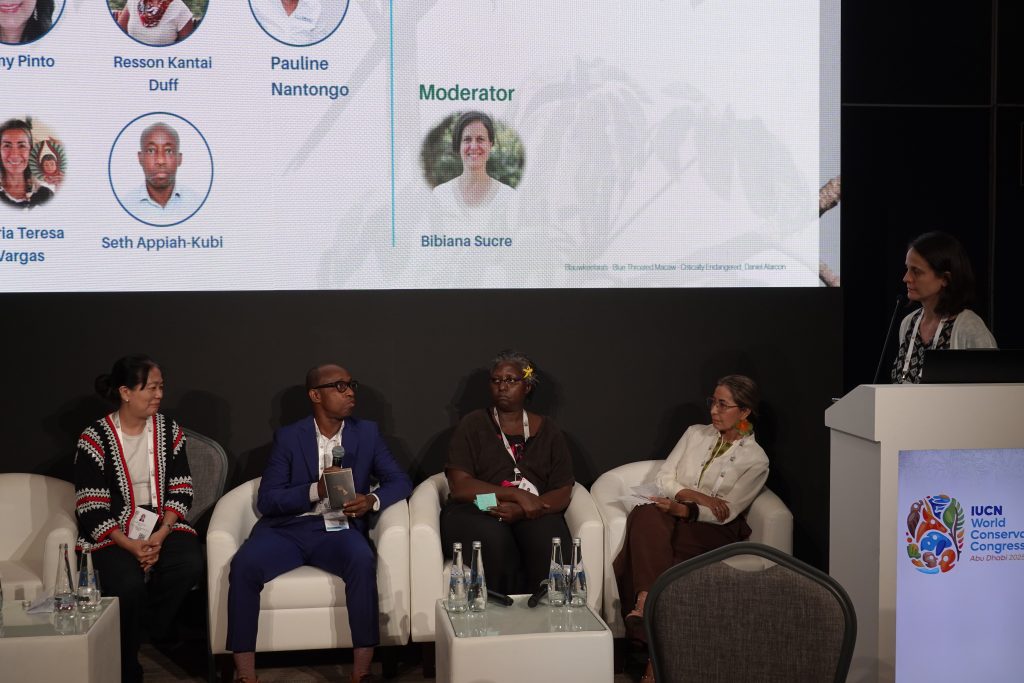
Event: Empowering Grassroots Conservation through Trust-Based Funding, Networking, and Capacity Support. The event emphasised the vital significance and efficacy of trust-based funding in empowering grassroots conservation actors such as NGOs, CBOs, women and youth groups, IP&LCs, researchers, and media. It highlighted their crucial role in key biodiversity areas despite often lacking support and recognition. © IUCN NL
Event: Nature’s last defenders: frontline conservation in declining civic spaces. The event offered a space for environmental defenders to exchange experiences, strengthen networks, and co-create strategies to counter restrictions. The event explored how to safeguard civic freedoms, challenge repressive tactics, and ensure that the people protecting our planet are safe and protected. © IUCN NL.
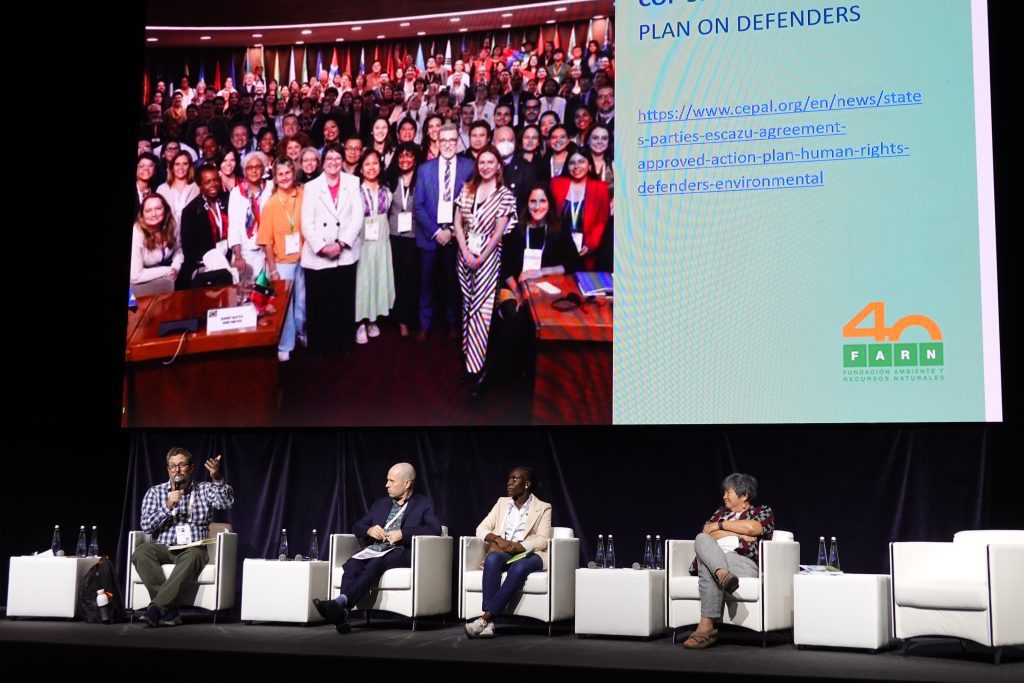
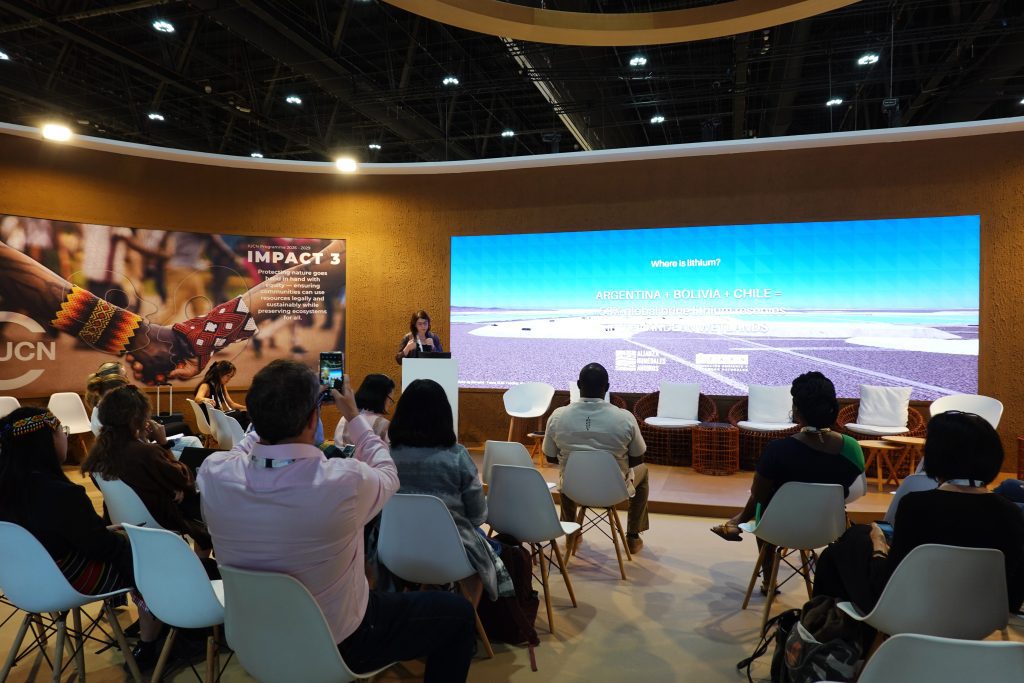
Event: Prosper with nature: safeguarding biodiversity and human rights in energy transition mineral governance. The event addressed the impact of the rising demand for these minerals in biodiversity-rich regions, with case studies from West Africa, Southeast Asia and South America. The interactive discussion with the audience emphasised the need for strong environmental and social safeguards, including no-go zones for mining in ecologically and culturally significant areas, and for aligning the energy transition with the GBF targets and global climate goals. © IUCN NL
Event: Women in a Degraded Amazon: the Need for Gender-inclusive and Intersectional Approaches to Environmental Crime. In this participatory session, women from the Amazon shared their experiences highlighting the importance of integrating a gender-inclusive and intersectional approach. Alongside experts from Latin American NGOs, they started the discussion on effective gender-inclusive approaches at the local, national and international level, including the implementation of the Escazú agreement. © IUCN NL

For a full overview of the events at the Congress organised by IUCN NL or partners, click here.
This year’s International Ranger Awards, held at the World Conservation Congress, saw two former partners of IUCN NL receiving a distinction. The International Ranger Awards celebrate the bravery and resilience of rangers who protect the world’s natural heritage.
One of them is Rodrigue Katembo Mugaruka, who is the Director and Deputy site manager of the Virunga National Park in the Democratic Republic of Congo. He was recognised for his bravery while protecting land from corruption and exploitation. IUCN NL supported Rodrigue during the SOCO case, in which he collected camera footage of SOCO International – a British oil company – and its contractors offering bribes and discussing illegal activities.
Also receiving an award were members of the Allée des Baobabs Protection and Management Team, from Madagascar, were nominated for fearlessly protecting Madagascar’s forests from fire and human pressures. Fanamby, the non-profit organisation that manages Allée des Baobabs actually was the first organisation to receive a grant from IUCN NL in Madagascar, and also a trusted partner during our Shared Resources Joint Solutions programme, which ran from 2016 to 2020.
IUCN NL congratulates both Mugaraka and the Allée des Baobabs Protection and Management Team for receiving these prestigious awards and commends them for their unwavering commitment to their cause.
At the Congress, IUCN officially launched the Second Edition of the IUCN Global Standard for Nature-based Solutions™. The Second Edition includes important updates that strengthen clarity, usability and safeguards. The revised Standard moves beyond a checklist approach to embrace systems thinking, emphasising the interconnections between ecological, social and economic dimensions. It streamlines language and structure for greater clarity, while reinforcing equity and rights by placing Indigenous Peoples and local communities at the centre of decision-making. Safeguards, grievance mechanisms and adaptive management are strengthened to ensure NbS remain effective over time. The update also introduces clearer framing of financial feasibility and long-term viability, and places stronger emphasis on enabling conditions – such as policy, finance and regulatory frameworks – to help scale NbS with confidence worldwide.
The Congress also saw the newest update of the IUCN Red List of Threatened Species™, which revealed growing threats to Arctic seals driven by climate change. The update also revealed that more than half of bird species globally are in decline. Meanwhile, the global green sea turtle population is rebounding thanks to conservation. Another assessment found nearly 100 additional wild bee species in Europe has been classified as threatened. The IUCN Red List now includes 172,620 species of which 48,646 are threatened with extinction.

12 October, 2026
From 19 to 30 October 2026, the UN Biodiversity Conference (CBD COP17) takes place in Yerevan, Armenia, under the theme…
08 October, 2026
We are pleased to announce that the third BESTLIFE2030 call for proposals is now open, providing new funding for locally…
